
Archaeological evidence of Acheulian tools, rock art sites, and cave paintings in the Chambal valley.
Sites like Pahargarh caves Morena district) feature paintings over 30,000 years old.
Early inhabitants were hunter-gatherers; tools include hand axes, cleavers, scrapers, and flakes.
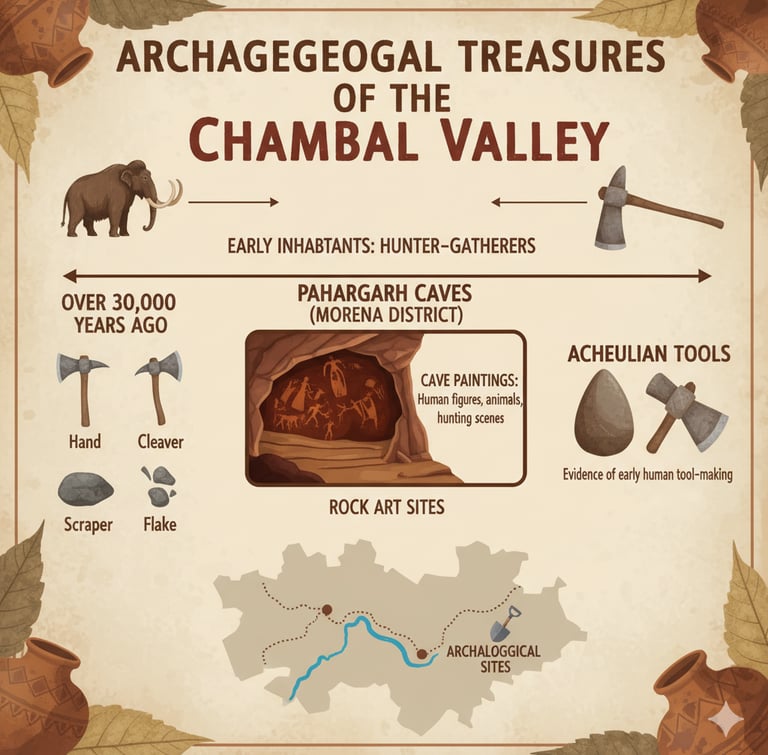
Prehistoric Era Lower Paleolithic):
Chalcolithic & Early Settlements Ahar Culture, 3600-1500 BCE
The first settled communities established in the Chambal Basin.
Settlements discovered at places like Ahar, Balathal, Gilund and Ojiyana.
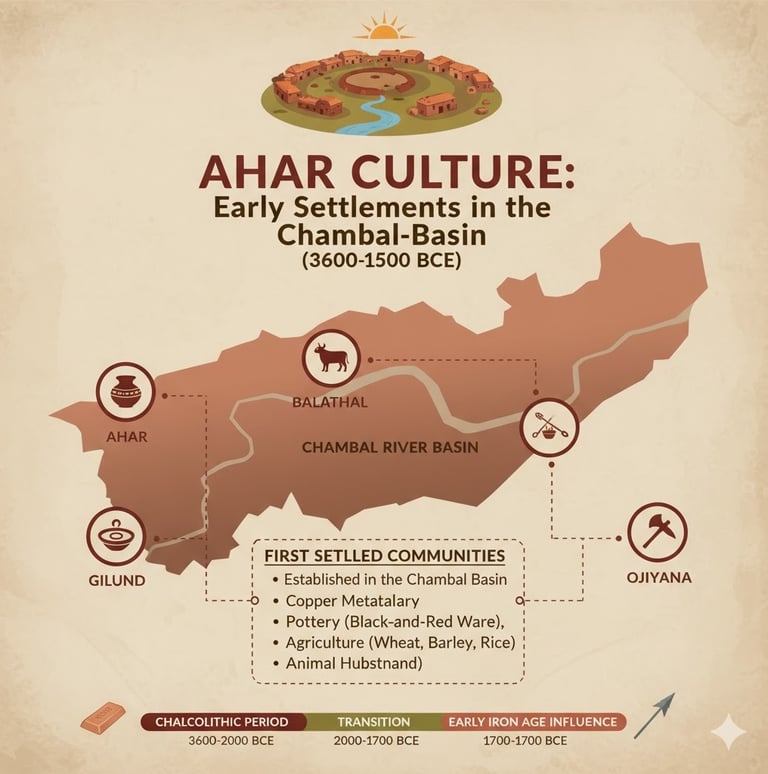
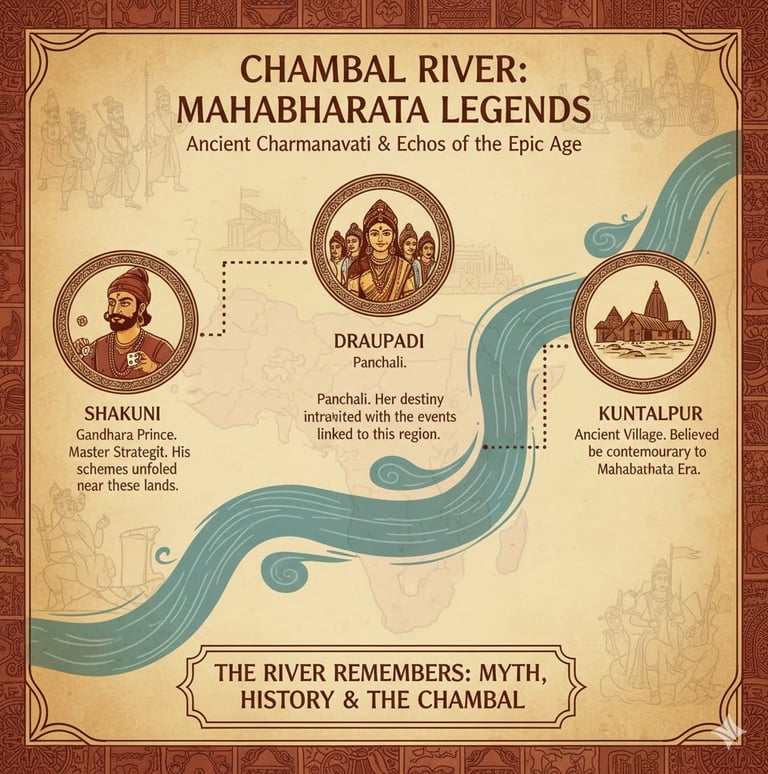
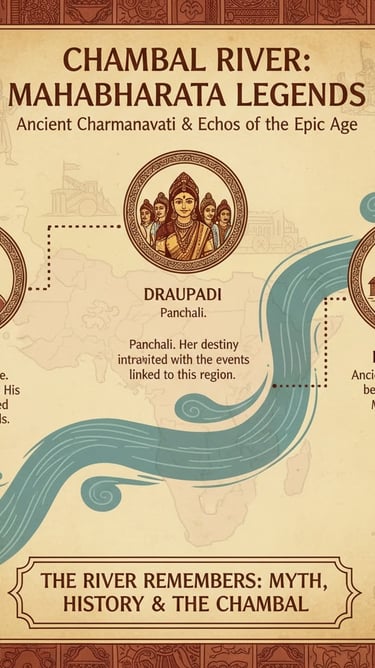
Ancient and Epic Age (Mahabharata Era):
Chambal River (ancient: Charmanavati) connected to Mahabharata legends.
The area linked with stories of Shakuni and Draupadi; certain villages like Kuntalpur are believed to date back to this era.
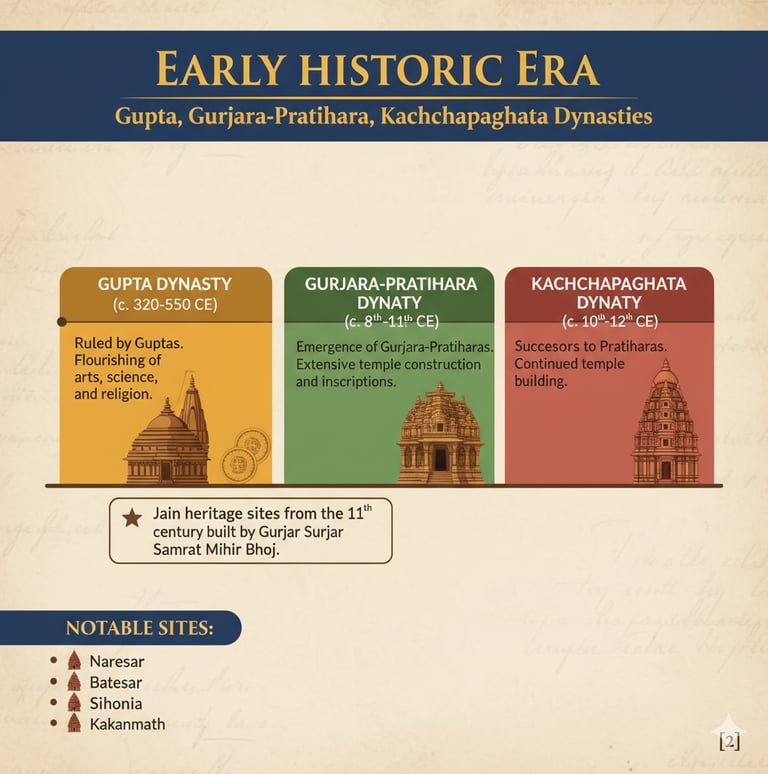
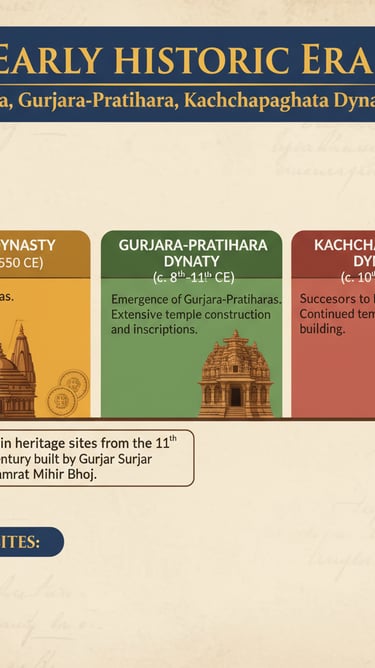
Early Historic Era
(Gupta, Gurjara Pratihara, Kachchhapaghata Dynasties)
Ruled by Guptas, later Gurjara-Pratiharas, then Kachchhapaghatas.
Construction of temples and inscriptions, notably at Naresar, Batesar, Sihonia, Mitaoli,and Kakanmath.
Jain heritage sites from the 11th century built by Gurjar Samrat Mihir Bhoj.
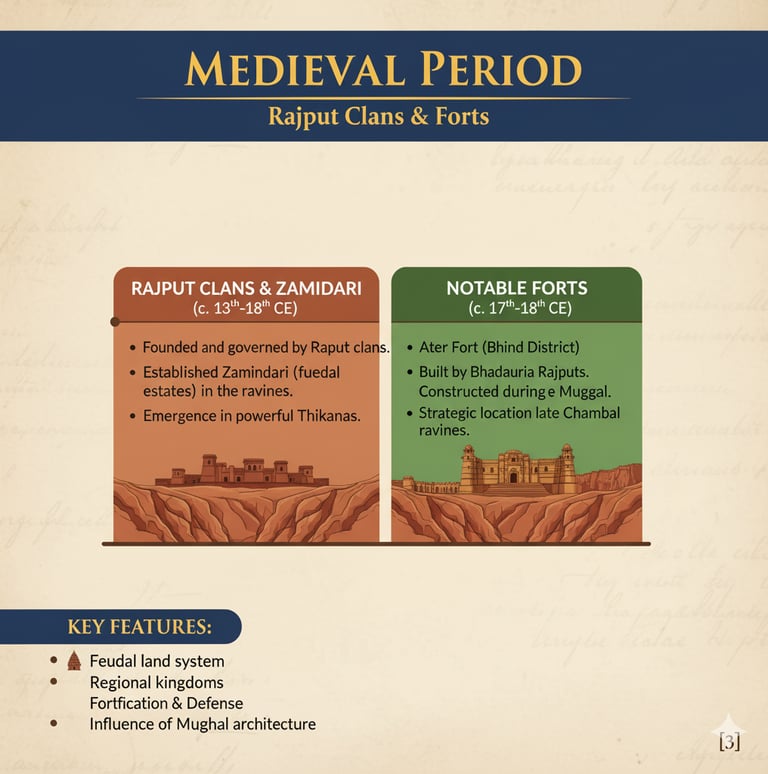
Medieval Period:
Founded and governed by Rajput clans, their zamindari (feudal estates) established in the ravines.
Forts like Ater Fort (Bhind district) built by Bhadauria Rajputs in late Mughal times.
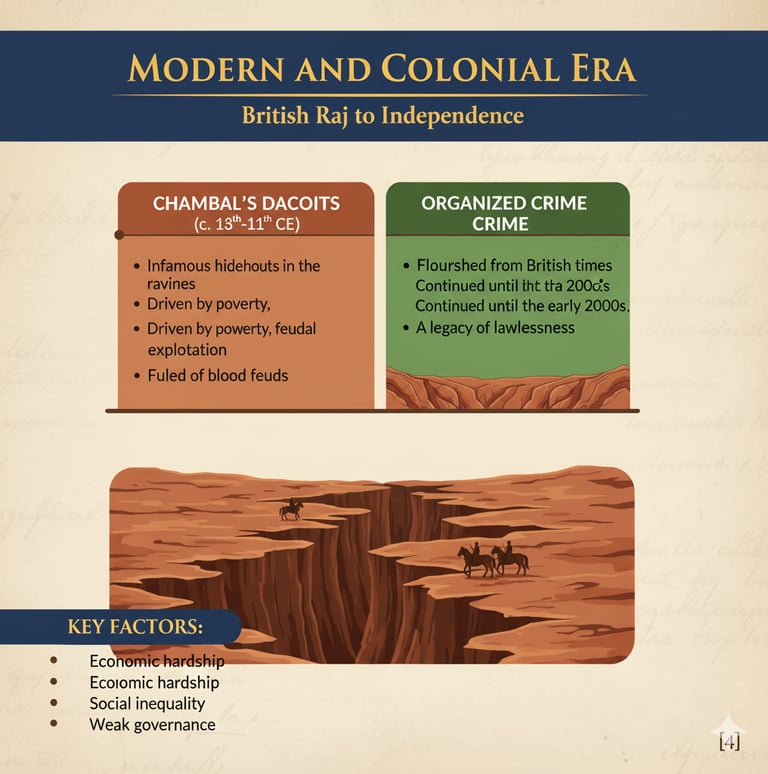
Modern and Colonial Era (British Raj to Independence)
Chambalʼs ravines became infamous hideouts for dacoits (bandits) due to poverty,
feudal exploitation, and blood feuds.
Organised crime flourished from British times until the early 2000s
Recent History & Conservation:
Anti-dacoit operations eradicated much banditry by the 2000s.
Establishment of National Chambal Sanctuary in 1979 for wildlife conservation.
Soil erosion and badlands remain a challenge; large-scale watershed development and green cover projects have been implemented.